
Alachua County Weekly Arrest Log
The ACSO site offers no weekly arrest feed. For multi-day coverage, the Alachua Chronicle Crime archive is the practical stop. It stacks dated jail-booking posts alongside selected arrest stories. The Chronicle labels its daily rows as a report from the ACSO Department of the Jail. Remember the paper is independent. It keeps no government record.
Work backward through several report dates to build a week of Alachua County bookings. That helps after a weekend. A full seven-day set is not guaranteed. The Chronicle deletes direct daily-log pages after one week. Category pages can keep headlines or other stories longer. The Chronicle Crime archive page shows where those dated booking posts live.
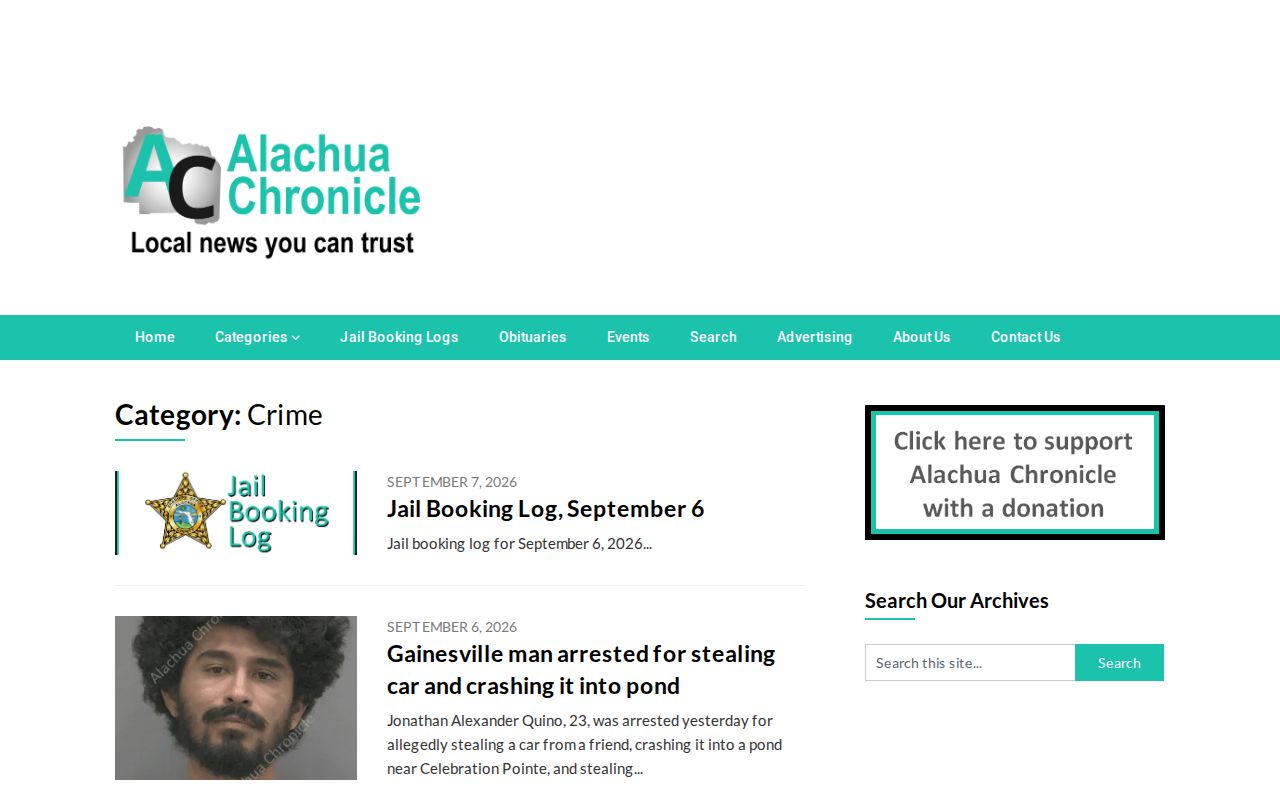
Use the article's stated report date to place each booking in sequence. Then confirm the record with ACSO or the Clerk.
Read Alachua’s Multi-Day Blotter
Sort out three dates first: the booking date and time, the jail report date, and the news publication date. One example carried a report date of June 20 but ran on June 21. So a headline timestamp is not the booking time. Work date by date. That habit also catches late posts.
- Open the Chronicle Crime archive and identify each Jail Booking Log within the period being checked.
- Record the report date named in each post rather than assuming the publication date is the booking date.
- Compare the name and date of birth, then note the charges exactly as labeled at arrest.
- Check the ACSO current inmate search for booking time, MNI, arrest agency, pod, and present county custody.
- Use the Alachua Clerk court index for the case number, filings, hearings, and disposition.
A missing date can mean slow publication, a removed page, or no Alachua County Jail booking at all. Search the nearby dates. Never merge two people who share a name. The narrower Daily Arrest Report page walks through the single-day sequence.
Alachua Arrest Log Entry Fields
The newspaper log keeps things compact. Name, DOB, and Charge(s) fill each row. An image appears when one exists. The official roster exposes a different field set, and a formal booking packet can hold more, so treating all three as one record hides real limits.
| Field or clue | How to use it |
|---|---|
| Name and DOB | Match identity across dated posts; confirm with official identifiers. |
| Charge(s) | Read as charges entered at arrest, subject to later change. |
| Image when available | A supplied booking photo, not evidence of the conduct charged. |
| Report date | The calendar day represented by the jail-provided data. |
| Publication date | When the news page appeared, often after the report day. |
| Official roster fields | MNI, booking time, age, pod, arrest agency, and image as shown. |
Bond and court results rarely fill the news row. The Eighth Circuit first-appearance material and the Clerk file add the case number, bond, filings, and later outcomes. Need a booking number for a records request? Take it from the sheriff interface, or ask ACSO Records directly.
Alachua Weekend Arrest Posting
Weekend and holiday bookings do show up. Neither ACSO nor the Chronicle promises a posting hour. A Monday visit to the archive might show the prior day's report, a catch-up post, or selected stories beside the logs. Read every stated report date around the weekend. A quiet archive does not mean an empty jail.
The wider window still matters. Jail booking timing, report compilation, late-night cutoffs, missing images, and publishing delays all shape what appears. A person can also leave custody before the week is out. The official roster answers the current-custody question.
Note: The source publishes no fixed holiday cadence, so no specific delay or Monday posting pattern can be promised.
Alachua Booking Archive Limits
The Chronicle deletes direct booking-log pages after one week. That makes it a discovery tool, not a lasting archive. A dead URL does not erase the government record. Florida's GS2 criminal-justice records schedule covers booking records, commitment and release lists, and inmate incarceration records, with retention measured from release. Jail docket books keep a separate permanent schedule. Holds, audits, litigation, and agency policy can stretch retention further.
For older dates, ask ACSO directly. Request the booking card, the booking photograph, or the commitment and release entry, and state the name, date range, booking number if known, and the exact record sought. ACSO may apply exemptions and redactions. It need not create a new report. The Clerk still holds the court history after a jail row drops offline.
Custody may also move past the county system. The Florida Department of Corrections Offender Search lists people in state prison or under FDC supervision, not fresh Alachua County bookings. Federal and immigration records sit with their own custodians. Start with ACSO for the booking record. Then follow the later custody or court path. The schedule sets minimum government retention but never forces any webpage to keep a row visible.
- Retention schedule
- A minimum rule for how long an agency keeps a record series, not an online-display promise.
- Booking record
- The intake record created when a person enters jail custody.
- Disposition
- The later court result, separate from the arrest charge.
- Custodian
- The agency responsible for the original public record.
Alachua Arrest News Sources
News stories help, but the official records win. The sheriff roster shows current custody. ACSO Records holds material the sheriff created, while the Clerk tracks the court case itself. A newsroom picks stories by editorial judgment. A piece may skip a booking or miss a later correction. The WCJB Crime page is a rolling local-news index, not a complete Alachua County jail blotter.
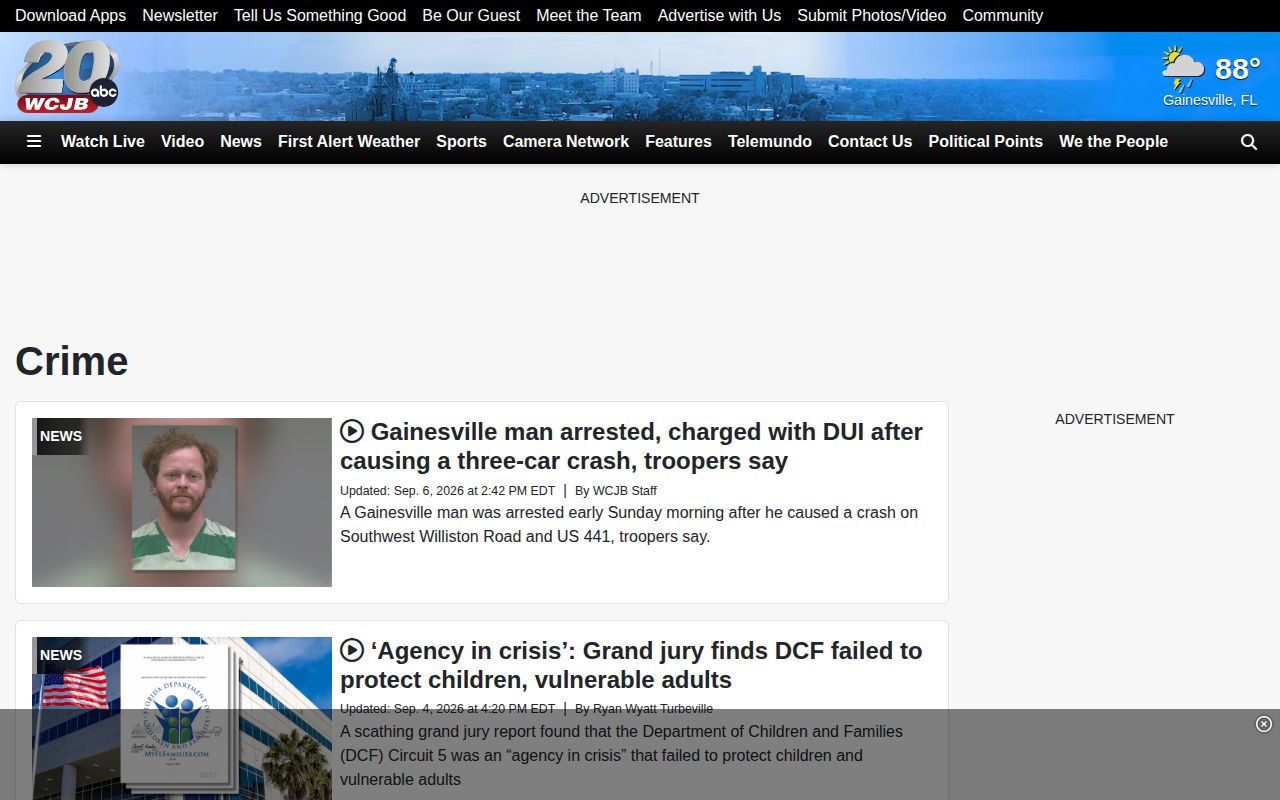
WCJB often builds stories from GPD or ACSO reports and may run a supplied image. Always check the article against the agency that handled the arrest. The Mainstreet Daily News Crime archive is another selective outlet for arrest, court, and wanted-person coverage in Alachua County.
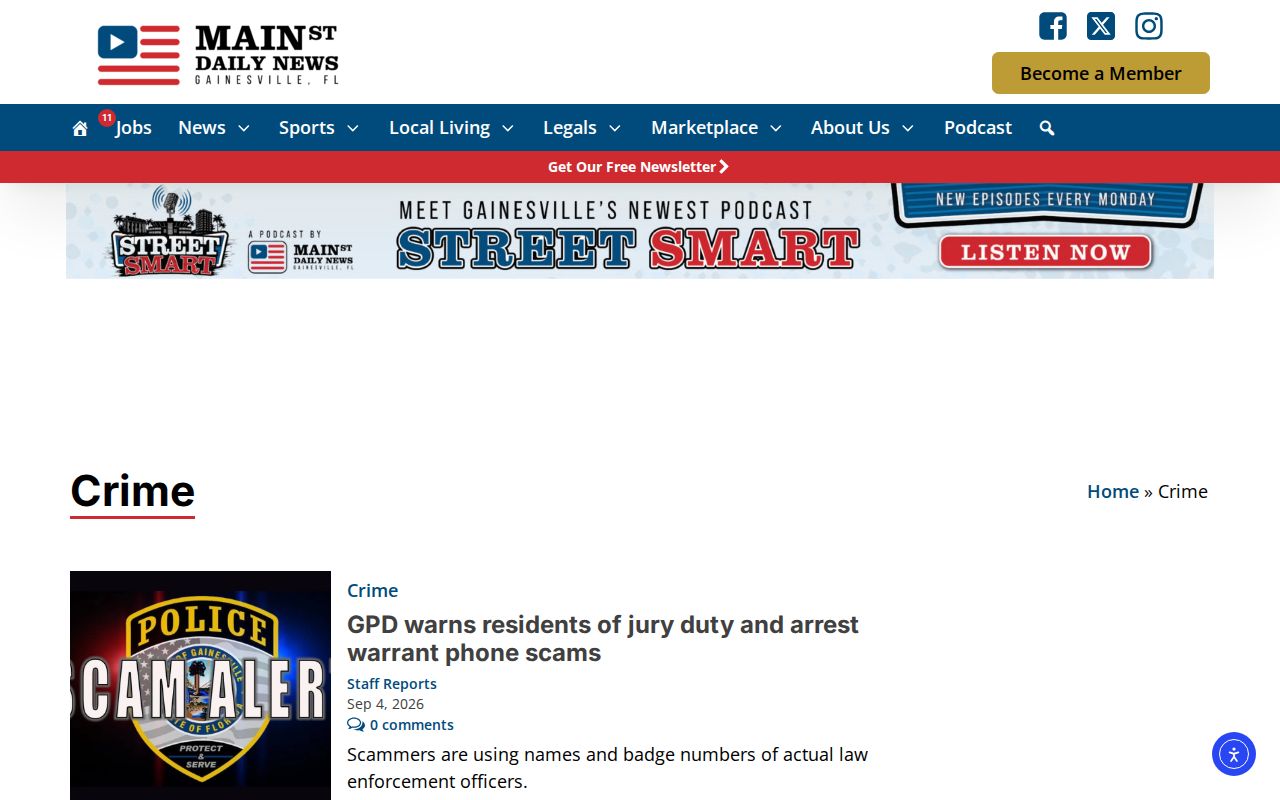
Its reporting adds narrative and court context. It still cannot replace the county booking record or prove current custody.
Alachua Arrest Counts Need Context
The Chronicle's own analysis flags its source data as jail-created, often delivered as PDFs, and sometimes dirty enough to need corrections. A weekly arrest count mixes several things. New local bookings sit alongside warrant matters, transported people, violations, added charges for someone already in jail, and repeat bookings. So the number is not all crime either. Use a count only when its categories and date rules are stated plainly. CityProtect incident totals measure something different. A police report can exist without any jail booking. One booking can also carry several charges at once. The Clerk's disposition later shows the court outcome, which is why names, dates, agencies, and record types should be reconciled first.
Alachua Arrests Are Not Convictions
Case details live elsewhere. The Alachua Clerk Court Records service lets you follow the case number, hearings, filings, and disposition. Watch for name collisions. Common names can create false matches, so confirm identity before treating a record as the right person.